
Don’t Forget to Destroy Your Damaged Hard Drives
When businesses upgrade their technology, it’s easy to focus on new systems and overlook what’s left behind. At A1 Shredding & Recycling, we work with companies throughout Georgia and Florida to make sure retired electronics, especially damaged or outdated hard drives, don’t become a security liability. Simply storing or discarding a damaged drive isn’t enough. True protection means proper hard disk drive destruction, even if the device no longer works.
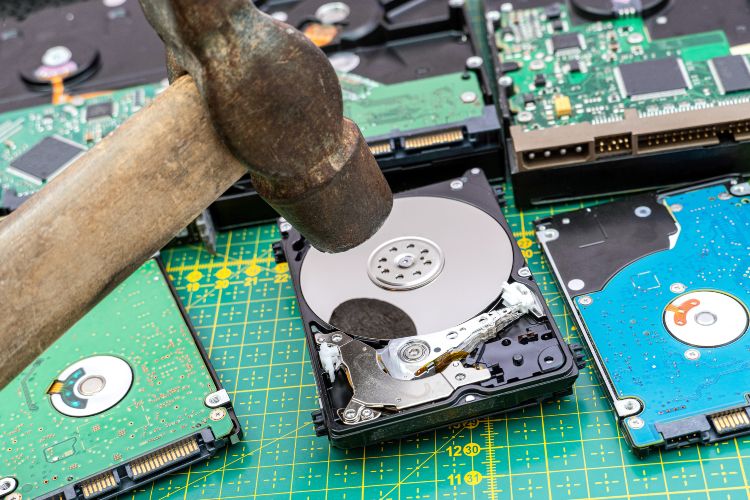
Why Damaged Hard Drives Are Still Dangerous
Many people assume that once a hard drive is no longer functional, the data on it is no longer accessible. Unfortunately, that’s not the case. Even if the device has been damaged by heat, moisture, impact, or hardware failure, the actual data stored on the disk can often still be recovered. In the wrong hands, a destroyed hard drive that hasn’t gone through a proper destruction process can still be a source of:
- Customer or client data
- Employee records
- Financial reports or accounting data
- Internal company communications
- Sensitive project files or intellectual property
The only way to guarantee that this information is permanently gone is to use verified hard drive destruction methods that make recovery impossible.
Mistakes Businesses Tend to Make
Companies often overlook or mishandle end-of-life device disposal, especially when dealing with damaged technology. The risk increases if there is no formal data destruction policy in place. Below are some of the most common errors businesses make:
- Tossing Damaged Hard Drives in General E-waste Bins – Even if the device looks beyond repair, it should never be thrown out without first going through the proper hard drive destruction process.
- Relying on Formatting or Software Wipes – Formatting a drive or deleting files does not destroy data on a hard drive. Many tools can recover files from “erased” drives.
- Leaving Damaged Drives in Storage – Out of sight shouldn’t mean out of mind. Drives sitting in storage still contain data that could be extracted later.
- Attempting DIY Destruction – Hitting or drilling a drive might seem effective, but if the platters inside remain intact, the data is still at risk.
- Working With Non-certified Vendors – Not all recycling or e-waste services are equipped for secure data destruction. Always verify that your vendor offers proper hard disk drive destruction.
How to Destroy a Hard Drive Without Physical Damage
Some companies want to know how to destroy a hard drive without physical damage to the device. This could be for environmental reasons, chain-of-custody tracking, or internal auditing. There are digital destruction options available, but they must be carried out with the right tools and verification. Here are a few secure approaches that don’t require smashing or crushing:
- Degaussing – This method uses a high-powered magnetic field to disrupt the magnetic domains on the hard drive platters, rendering the data unreadable. It must be done with certified equipment.
- Secure Data Wiping – Advanced software can overwrite every bit of data on the drive multiple times. This is only valid if the drive is still functional and can be verified with a completion report.
- Encryption Followed by Deletion – If the drive was fully encrypted before use, deleting the encryption keys effectively makes the data inaccessible. This method is only reliable if encryption was enforced organization-wide from the start.
Despite these options, physical destruction remains the gold standard for security. It ensures that every part of the drive is permanently disabled, with no chance of future recovery.
Frequently Asked Questions
Is it possible to recover data from a destroyed hard drive?
If the drive hasn’t gone through a certified destruction process, there’s always a chance of partial data recovery. That’s why professional hard drive destruction methods are essential.
Can I destroy a hard drive myself by hitting it or drilling it?
Physical damage may not be enough. Even a destroyed hard drive with a cracked casing could still have intact data. Professional shredding ensures complete destruction.
What’s the safest way to destroy data on a hard drive?
The safest method is physical shredding by a certified provider. It guarantees that all data-bearing components are fully destroyed.
Are there options if I want to destroy a hard drive without damaging the device?
Yes. Secure wiping or degaussing are options for functional drives, but they must be verified through proper reporting. However, they are not suitable for already damaged drives.
Do you offer hard drive destruction in Georgia and Florida?
Yes, we provide secure hard disk drive destruction across both states. We also supply certificates of destruction and follow strict chain-of-custody protocols.
Schedule Hard Drive Destruction Today
If you have damaged or outdated hard drives sitting around, A1 Shredding & Recycling offers trusted hard drive destruction in Georgia and Florida. Our shredding services include options for on-site and off-site service, verification, and environmentally responsible disposal. Contact us today to schedule a pickup or learn more about our secure destruction services.